Multi-Pet Portrait Composition Tips: Combining Photos Seamlessly
October 27, 2026 · 5 min read
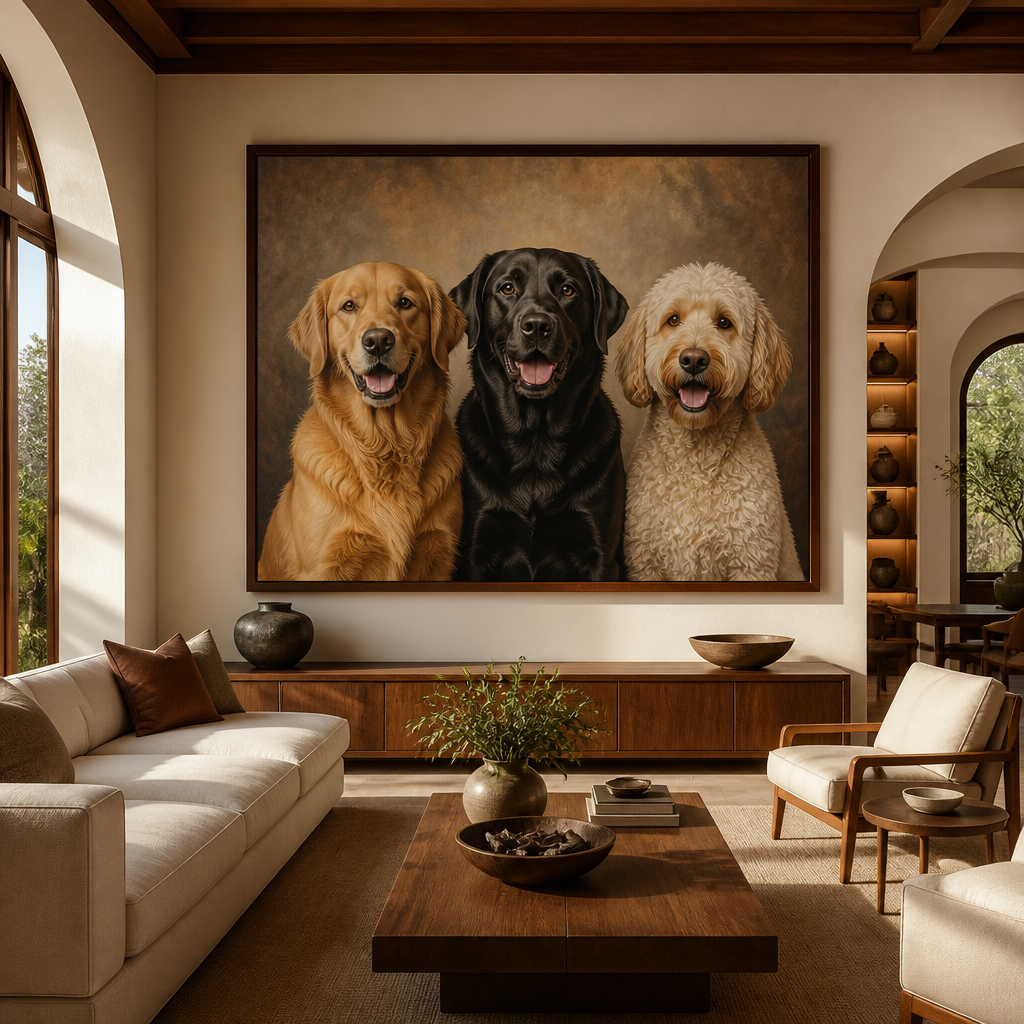
Creating a cohesive multi-pet portrait from separate photos requires aligning lighting direction, matching camera angles, and maintaining accurate relative scale between animals. When combining pets into a single composite digital painting, placement dictates visual balance—larger or darker pets typically anchor the bottom or center, while smaller pets frame the top or sides. At PetlyArt, you do not need all your pets in one photograph; individual photos can be combined seamlessly into a single custom artwork. Understanding key composition rules ensures your final custom piece looks natural rather than pasted together.
How do you combine separate photos into one multi-pet portrait?
To combine separate photos into a single multi-pet portrait seamlessly, the original reference photos should share similar lighting directions and camera angles. Natural daylight coming from one side creates consistent highlights and shadows across all pets, making them look as if they occupied the same physical room when photographed. Avoid mixing high-angle shots taken from above with direct eye-level photos, as this perspective mismatch distorts depth and makes composite artwork look artificial.
Choosing photos taken at eye level with your pets provides the most flexible foundation for artist assembly. Eye-level perspectives allow the artist to position pets side by side or in layered arrangements without forcing unnatural tilts in head positions or body angles.
How should you scale different pets relative to each other?
Maintaining correct physical proportions between animals is essential for a believable multi-pet composition. Professional portrait artists rely on key anatomical reference points—such as shoulder height, chest width, and muzzle size—to calculate realistic scaling between different breeds.
When submitting separate photos of a large dog like a Golden Retriever alongside a small breed like a French Bulldog or cat, adding a brief note about their relative heights helps the artist establish exact proportions. If a smaller pet sits slightly closer to the foreground in the composition, their scale can be increased intentionally to create realistic depth of field.
Where should each pet be placed in the portrait layout?
Effective multi-pet portrait layout relies on classic visual hierarchy principles such as triangular grouping and balanced weight distribution. Placing the largest or darkest-furred pet slightly lower or toward the center creates a grounded visual anchor for the viewer's eye.
Smaller pets or animals with lighter coats can be positioned slightly elevated or flanking the center, creating a balanced shape that guides the viewer smoothly across the canvas. Avoid lining pets up in a rigid horizontal row of equal height, which creates a flat, static image.
What visual elements unify pets from different source photos?
- Consistent directional lighting and matching shadow angles across all subjects
- Harmonized color temperature, aligning warm indoor tones with cool outdoor light
- A shared depth of field that applies soft background focus equally behind every pet
- Balanced color contrast so no single pet visually overpowers the rest of the group
- Uniform digital brushwork and canvas texturing applied seamlessly across all animals
How do you handle composition for pets of vastly different sizes?
When featuring animals with large size differences—such as a Great Dane alongside a domestic cat—staggering their vertical positions prevents the smaller pet from being visually lost in the portrait. Positioning the smaller pet on an elevated surface, like a chair cushion or step, brings their eye levels closer together without distorting physical scale.
Subtle overlapping also builds believable dimension in multi-pet arrangements. Allowing the ear or shoulder of a foreground pet to sit slightly in front of a background pet connects the subjects visually and eliminates awkward gaps between separate source photos.
What portrait size works best for multi-pet artwork?
Multi-pet portraits require larger canvas dimensions to ensure every animal's facial features and coat textures remain crisp and detailed when printed. A two-pet composition displays best on a minimum canvas size of 12x16 inches, while compositions featuring three, four, or more pets require 18x24 inch or 24x36 inch canvases for proper visual balance.
PetlyArt prepares all final artwork files at 300 DPI high resolution to guarantee sharp detail at any physical scale. Gallery-wrapped canvases range from $59 to $149 depending on size, while smaller tabletop keepsakes start at $24.
Why is a digital proof critical for multi-pet compositions?
Combining multiple pets into one painting involves subtle artistic choices regarding balance, color matching, and placement. On the PetlyArt website, the immediate on-screen preview shows basic photo placement to confirm image selections. However, the true artistic assembly happens after ordering, when a dedicated digital artist crafts the complete composition.
Once crafted, your customized artwork is emailed as a digital proof for your approval before printing starts. If the scaling feels slightly off or you want to adjust pet positioning, PetlyArt offers free revisions before your custom canvas goes to print.
Next steps
To create your custom multi-pet portrait, browse the PetlyArt custom pet portrait collection and upload separate, well-lit photos of each animal. Select your preferred background color, canvas size, and frame style, and our professional artists will handle the complex work of alignment, scale, and lighting integration.
For veterinary clinics, pet groomers, pet cremation services, and pet content creators, PetlyArt offers a dedicated partner program. Partnering with PetlyArt enables your business to offer custom multi-pet portraits and high-quality memorial keepsakes directly to your clients. Contact our team to learn more about partner discounts, referral programs, and custom ordering options.
Combining multiple pet photos into a single portrait requires matching lighting angles, using triangular layouts, and maintaining accurate relative scale. Reviewing a digital proof before printing ensures all pets look naturally grouped together.
Where to go next
- Heirloom Pet Blanket — Machine washable, printed edge to edge.
- How it works — Upload, artwork, email proof approval, then printing and delivery — step by step.
- Pet memorial keepsakes — The full memorial collection: canvases, blankets, pillows and inscriptions in one place.
- Partner & affiliate program — For vet clinics, groomers, cremation services and creators — 15% commission, zero inventory.
- Customer FAQ — Turnaround times, proof approval, shipping, revisions and refunds answered in full.
Related reading
5 min read
How Long Does a Custom Pet Portrait Take? Full Timeline
A standard custom pet portrait takes between 7 to 14 business days from photo submission to final delivery, depending on proof approvals and shipping methods.
5 min read
Custom Pet Mug and Keepsake Gift Guide
A practical guide to selecting custom pet mugs and keepsakes. Compare materials, pricing, photo requirements, and digital proofing workflows before ordering.
5 min read
How Print-On-Demand Pet Art Is Produced
Discover how print-on-demand pet art transitions from photo upload to final 300 DPI print. Learn about digital proofing, printing technology, and materials.